Point SQLBackup at MySQL and it handles the rest — native mysqldump with --single-transaction for a consistent InnoDB snapshot, streaming gzip, client-side AES-256 encryption, and shipping offsite to S3, SFTP or local storage on a schedule. Then restore any database with mysql in minutes.
mysql isn't a backup strategyIt breaks silently after a version upgrade, leaves plaintext dumps on disk, and nobody ever tests the restore. SQLBackup fixes all three — and keeps a record that it did.
Self-hosted, Amazon RDS, Aurora MySQL, Google Cloud SQL, Azure, PlanetScale, or a container — SQLBackup uses MySQL's own mysqldump with --single-transaction, so InnoDB stays consistent without locking writes. Portable .sql, ready to restore anywhere.
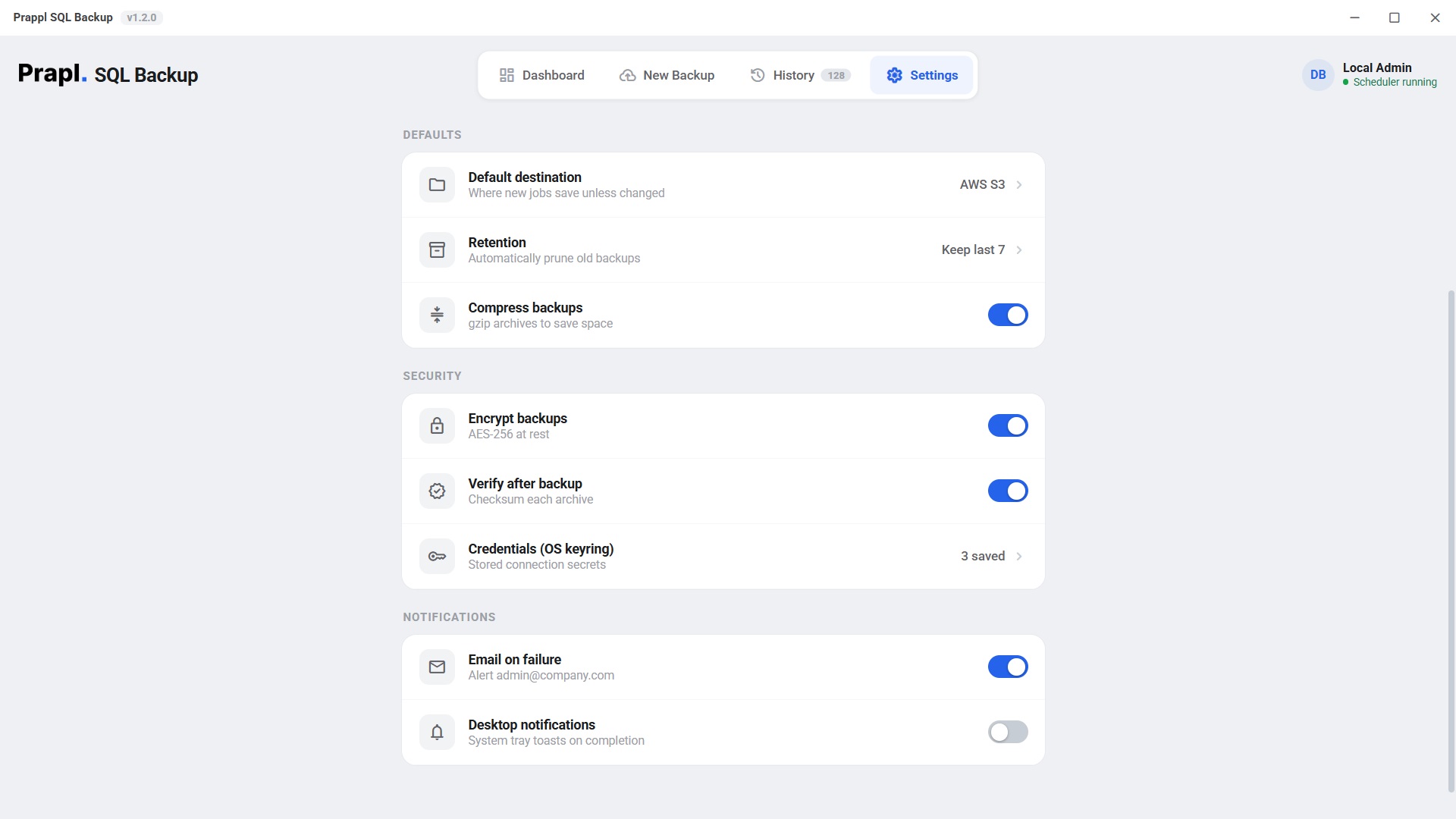
Backups are compressed and encrypted with authenticated AES-256-GCM on your machine. Your S3 bucket or SFTP host only ever stores ciphertext — and a tampered dump fails loudly on restore instead of corrupting production.
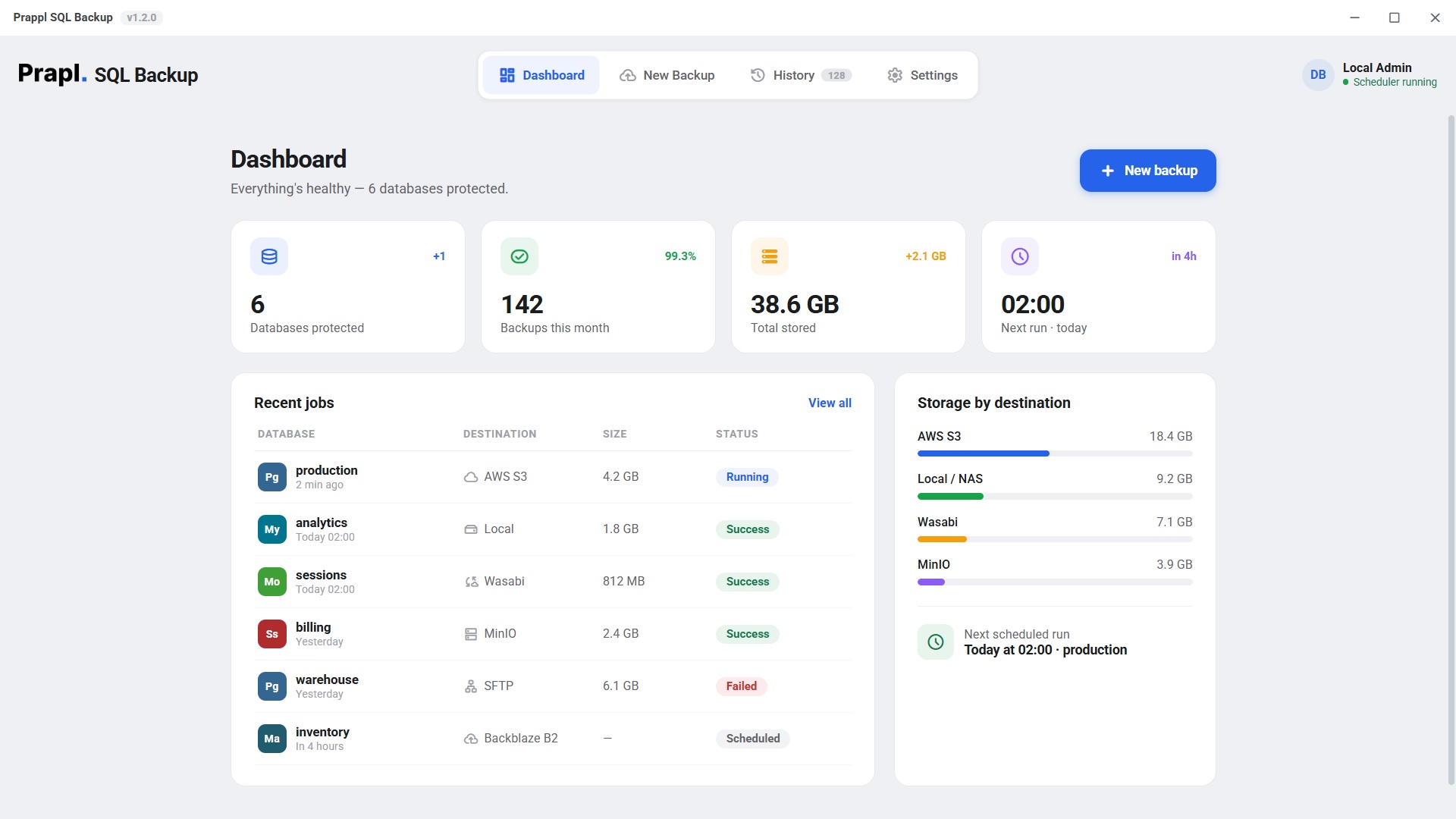
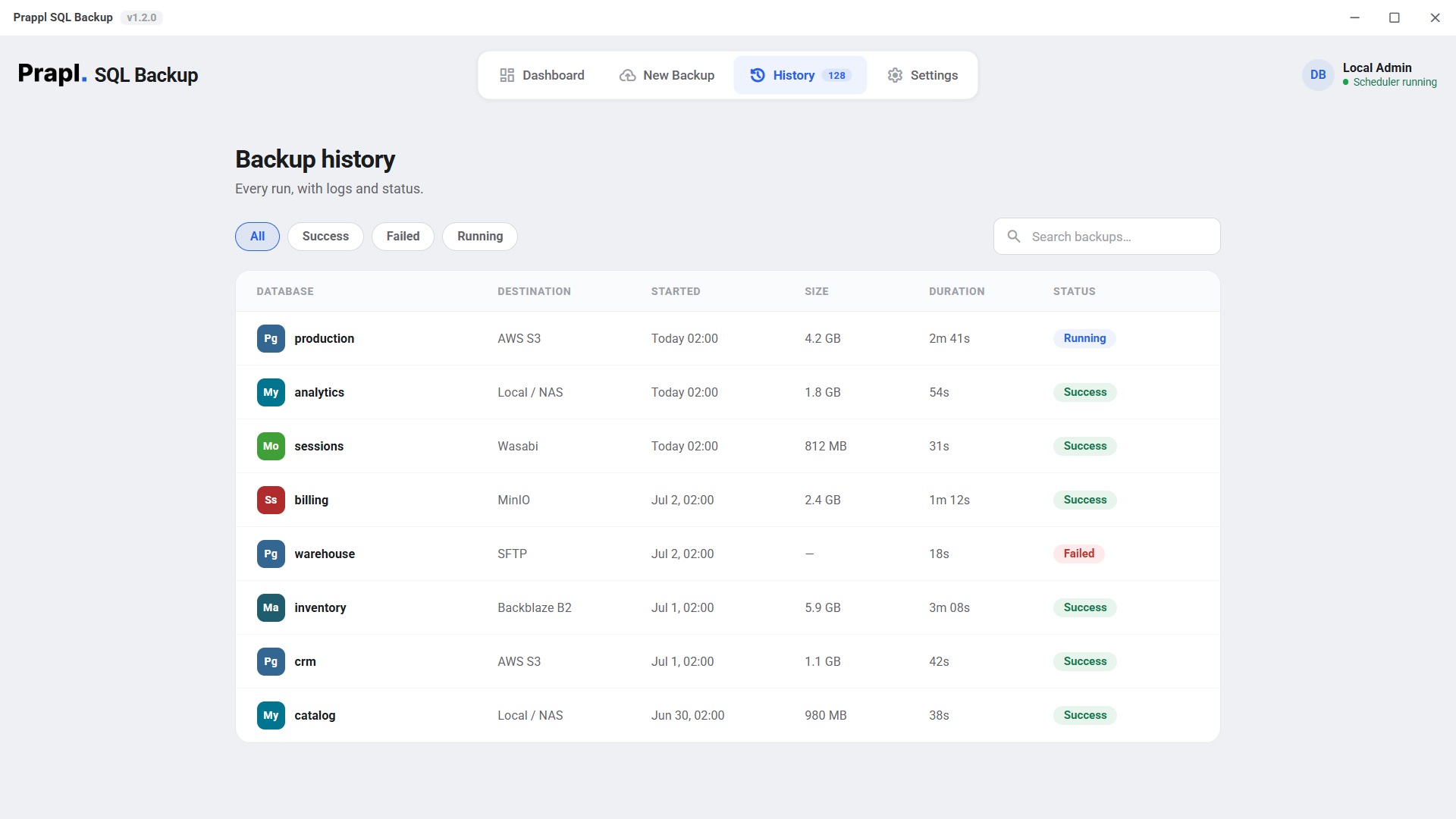
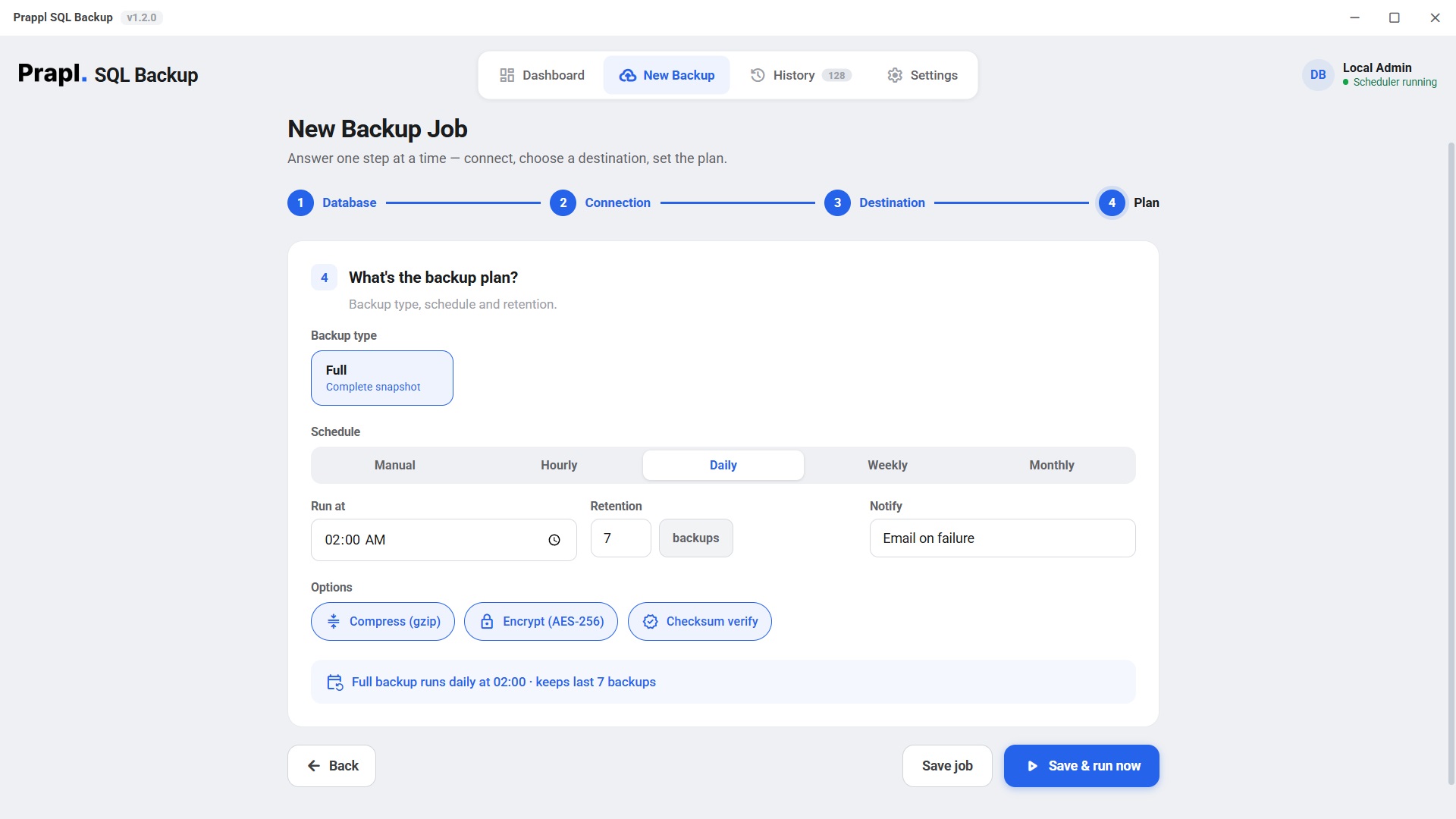
A cron scheduler runs every job on time and records the result in a history log — with email alerts the moment one fails.
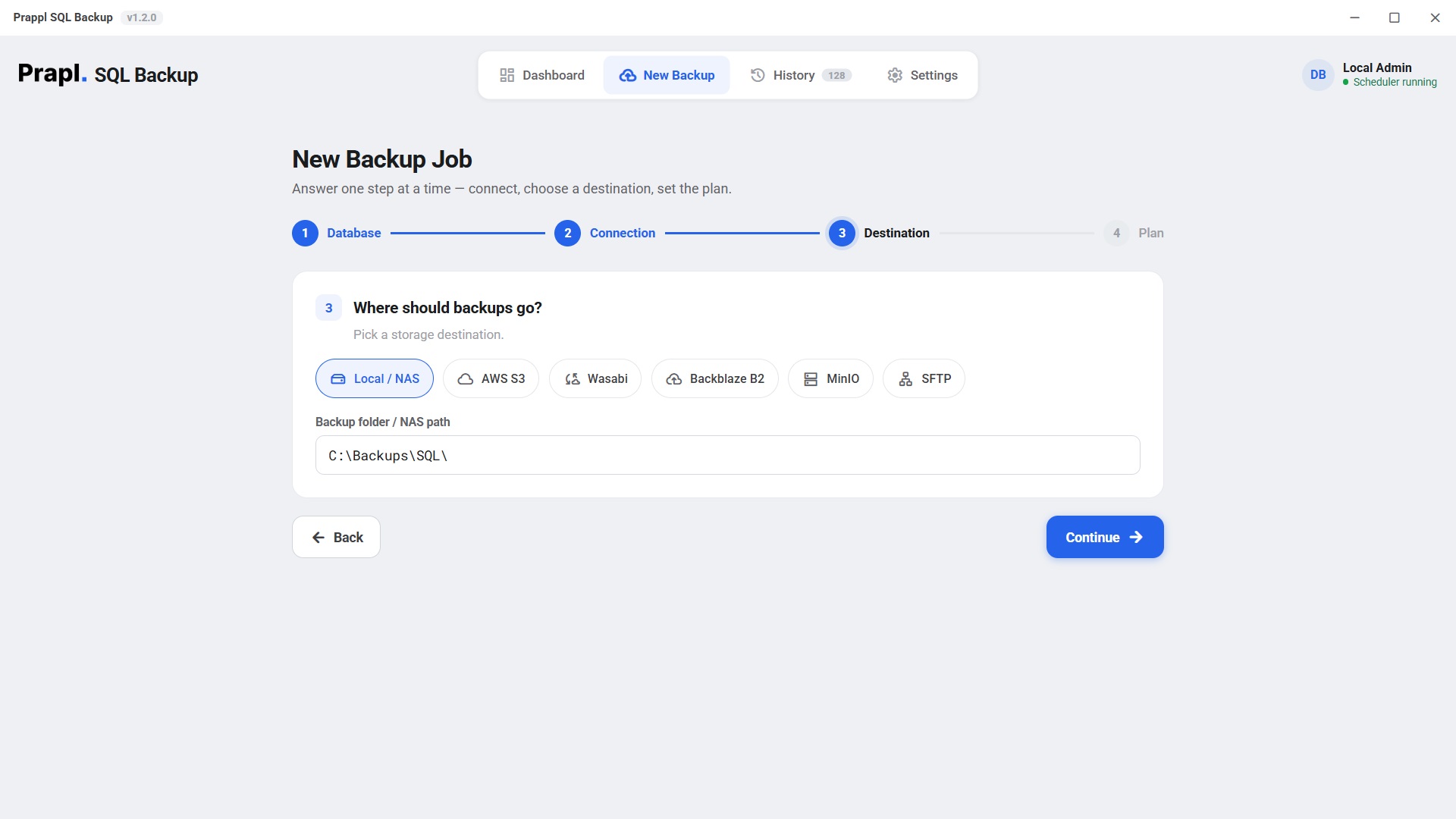
Send each dump to local/NAS, Amazon S3, Wasabi, Backblaze B2, MinIO and SFTP at once, each with its own retention window.
One command downloads, decrypts, decompresses and mysqls into a fresh database — so you verify before you promote.
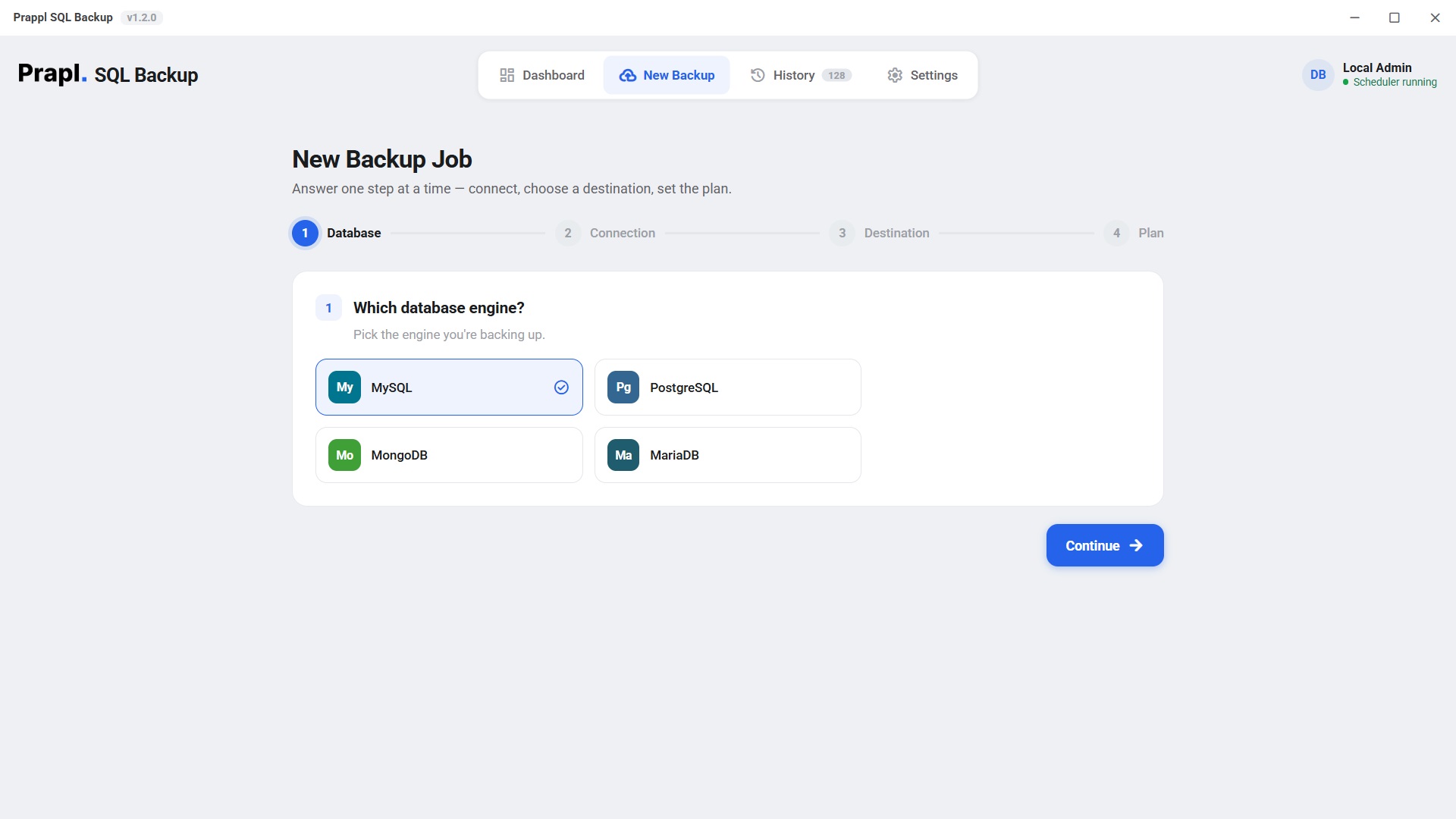
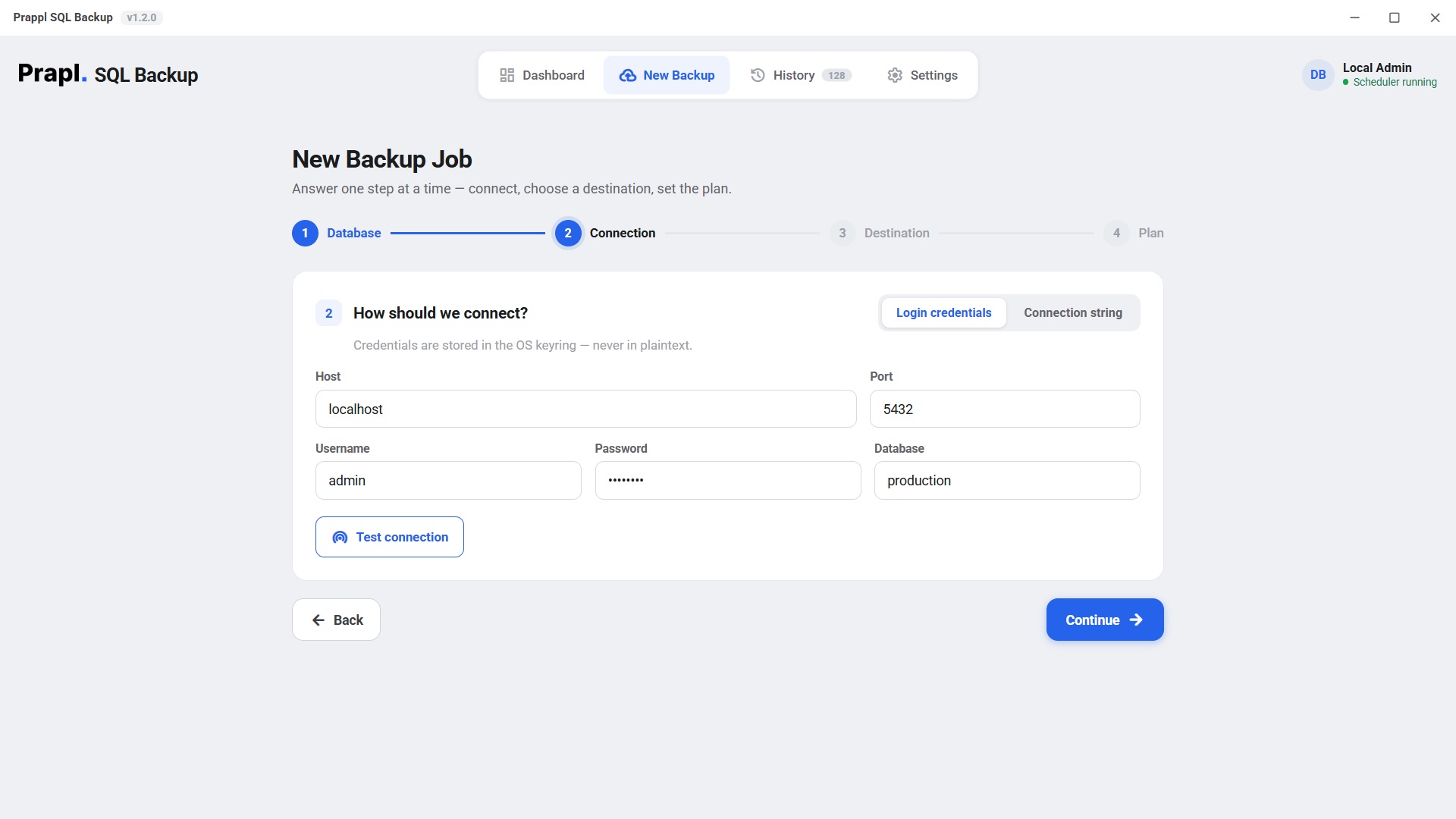
Real screenshots from the app — click a step to see it. The New Backup wizard asks one question at a time, so you never have to know MySQL internals to get a safe, offsite backup.
Managed or self-hosted, SQLBackup connects the right way — including the fiddly bits like SSL and cluster topology.
Every backup streams through four stages — nothing is ever fully loaded into memory. Click a stage to dig in.
With SQLBackup, recovering a MySQL database is one command — download, decrypt, verify, decompress, and mysql into a fresh database. Press play to watch every step.
Tip: schedule a monthly test restore — an untested backup isn't a backup yet.
Your password becomes a 256-bit key via scrypt with a random per-file salt — slow to brute-force by design.
GCM tags mean a corrupted or altered dump fails to decrypt — loudly — instead of restoring garbage into production.
Connection passwords live in Windows Credential Manager or the Linux Secret Service — never in a plaintext config file.
No account, no phone-home. Backups go straight from your machine to your storage. We never see your data or your keys.
The honest trade-offs. SQLBackup is built for scheduled, encrypted, portable logical backups you actually control.
| Capability | SQLBackup | DIY mysqldump + cron | Managed cloud snapshots |
|---|---|---|---|
| Automatic scheduling | Built-in cron | Manual crontab | Provider default |
| Client-side AES-256 encryption | Always | Plaintext dumps | At rest, provider-held keys |
| Offsite to your own storage | S3 · SFTP · NAS | Scripts you maintain | Locked to provider |
| Portable — restore anywhere | Standard mysql | mysql | Same provider only |
| Failure alerts & history | Email + log | Fails silently | Basic console |
| You hold the keys | Always | ||
| Cost | $5/mo, flat | Your time | Storage + egress |
Forged from real 3 a.m. restores, not a spec sheet. The workflow mirrors how experienced engineers actually recover MySQL.
Battle-tested defaultsUses MySQL's official tooling and audited cryptography (AES-256-GCM, scrypt) — plus real edge-case handling like SSL and cluster topology.
Native tools · audited cryptoAn openly documented backup format and standard mysql output mean your data is never trapped in a black box — restore it anywhere.
No telemetry, no account for your data, no master key. Backups go straight from your machine to your storage — and pricing is one honest flat rate.
No phone-home · you keep the keysSQLBackup builds directly on MySQL's own, documented tools. Verify our approach against the official docs:
mysqldump — the utility we use to take each backup..sql dump is restored with the mysql client.From solo founders to platform teams — here's what people say after switching to SQLBackup.
Sample testimonials shown for layout — replace with your own verified customer quotes before launch.
Protect the production database without hiring a DBA. Nightly encrypted dumps to S3, with an email the moment one fails.
Give every client a tidy, encrypted, offsite MySQL backup — and restore any of them to a new server in minutes.
Encryption at rest by default, retention you control, and a clear, tested restore path auditors like to see.
Grab a consistent snapshot to spin up staging or run analysis — restore a production dump into a throwaway database safely.
Own a portable copy of your managed MySQL that isn't locked to one provider — restore it anywhere mysql runs.
Back up your self-hosted apps' database to a NAS and a cheap cloud bucket. No subscription lock-in, no telemetry.
mysqldump --single-transaction --routines --triggers --events · MySQL Shell util.dumpInstance for large, parallel dumpsmysql dbname < dump.sql (or mysqlsh util.loadDump for instance dumps)AES-256-GCM, key via scrypt, per-file salt, per-chunk nonce · secrets in OS keyringmysqldump with --single-transaction (plus --routines --triggers --events) so InnoDB tables get a consistent snapshot without locking writes. For very large databases it can use MySQL Shell's parallel util.dumpInstance instead. Restores use the standard mysql client.AES-256-GCM before anything leaves your machine — the key is derived with scrypt and a random per-file salt. Connection secrets live in the OS keyring (Windows Credential Manager / Linux Secret Service), never in a plaintext config file.mysqldump on a schedule, not continuous binlog-based PITR. That gives you fast, portable whole-database restores for daily protection; if you need point-in-time recovery, keep binary logging on alongside it.One flat price covers every engine on the machine. Explore the others:
Try every feature free for 15 days — no card, no charge. Keep it for $5/month, billed annually, with a 14-day money-back guarantee on your purchase.